



Troy, you’ve redeemed more than 100 million miles. How did you become that person?
Troy Liu: My first few years in miles were all about earning. I did mileage runs, signed up for credit cards, and even paid other classmates’ tuition, because the United co-brand card earned 2 miles per dollar on tuition (don’t worry, I got reimbursed). I took my first job largely because it had me flying SFO–IAD every week. But my redemptions were still conventional: round-trip, long-haul international trips in business or first class.
That changed in 2008. I quit my job, became obsessed with award charts, and decided to spend the next few years traveling the world in “extreme mode.”
In 2010, I redeemed 5,500 BMI Diamond Club miles for a business-class trip from Almaty, Kazakhstan, to Addis Ababa, Ethiopia, with a stopover in Larnaca, Cyprus, and a co-terminal in Nicosia, Northern Cyprus. I wanted to see how much of the world I could explore on a single ticket.

I used 120,000 Delta SkyMiles to fly three different Airbus A380s in business class from Asia to Madagascar, with stopovers in Seoul,New York, and Paris.
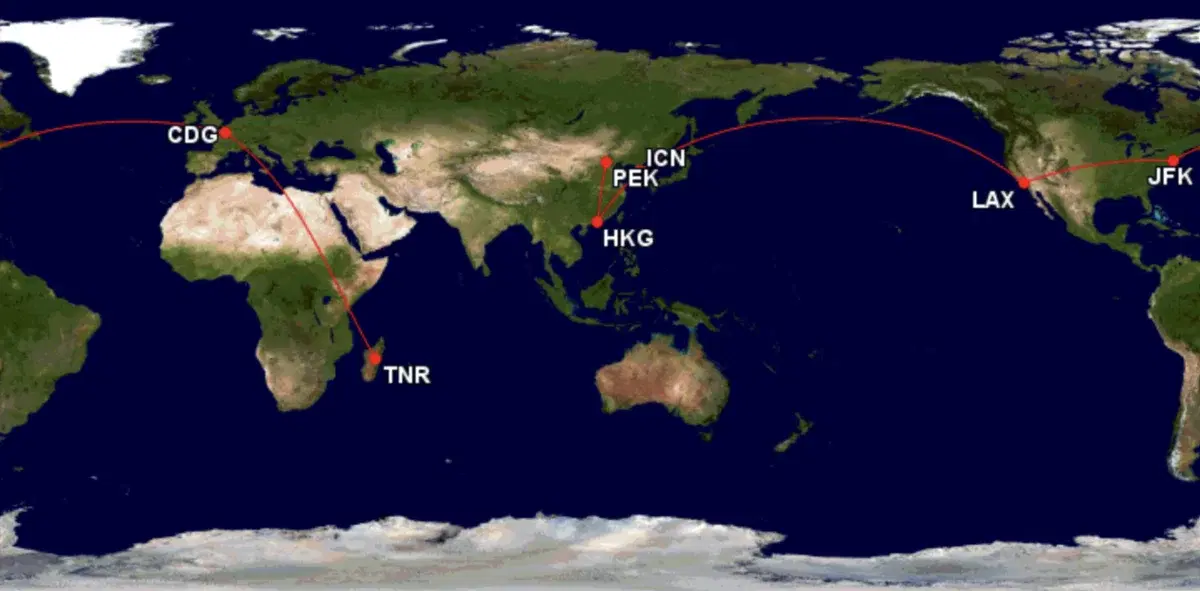
The joy was in how much each trip could offer. Every layover/stopover was a chance to drop into a new culture for a day, and every redemption revealed another possibility within the rules.
The 100 million miles and over 130 countries didn’t come from one trip, It came from 25 years of obsession.
You’ve held up to 150 credit cards, were active in 35 airline programs and 15 hotel programs and had elite status with nine airlines and five hotel chains. Why?
Troy Liu: First of all, I’ve lived in 11 cities across six countries, and the programs you earn miles from actually flying depend heavily on where you call home.
Back in the day, I was a BoardingArea blogger, an early influencer before “influencer” was even a word. If I was going to write about loyalty programs, and later work with airlines on partnerships, I had to know these programs inside and out. Not from press releases, but from living inside them as a real member. That meant joining everything, earning everything, and testing everything. One year, I held elite status with nine airlines and five hotel chains at the same time. That firsthand experience later shaped how I work with programs
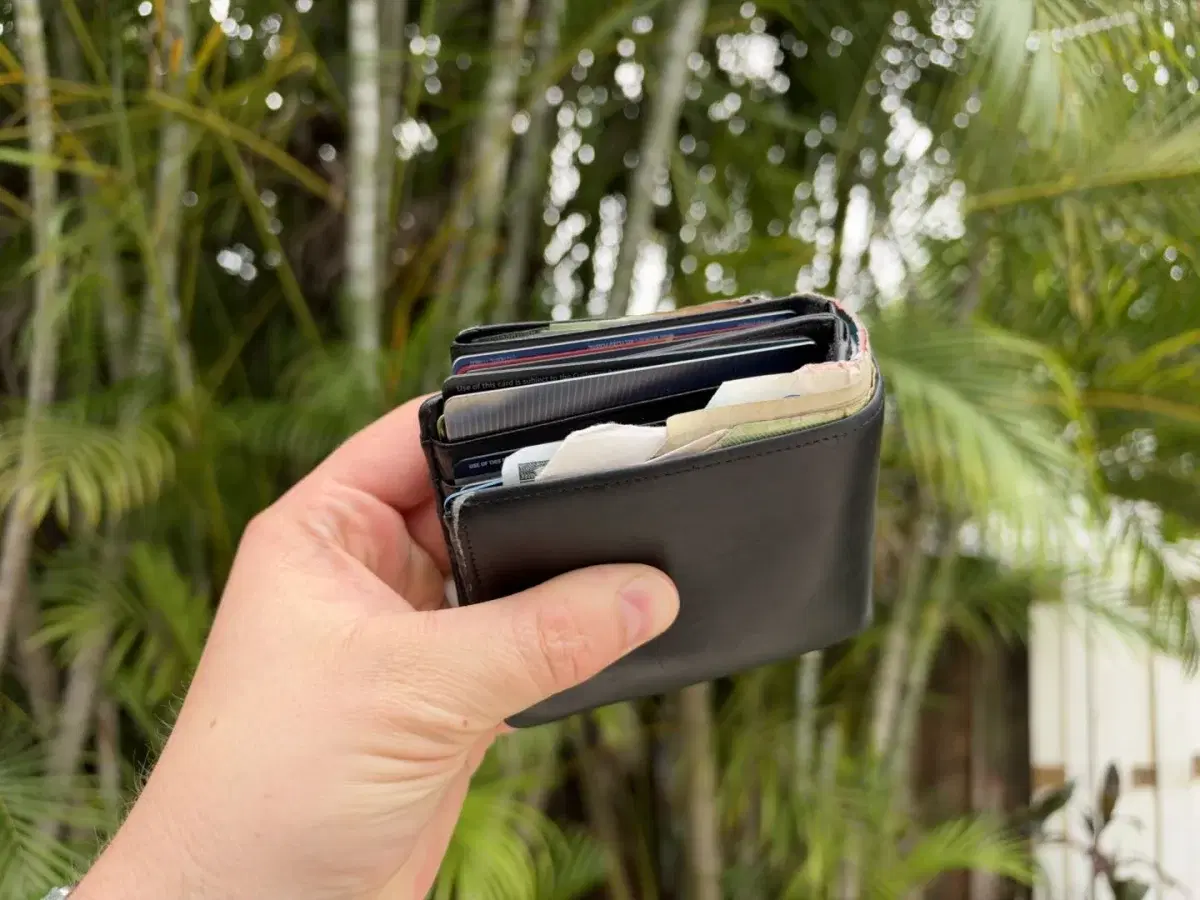
And yes, the credit cards. My household currently holds around 150 cards, and we pay roughly $20,000 a year in annual fees. I don’t carry them all at once (I’m obsessive, not reckless), but I do travel with 20–30 in my wallet and another stack in my backpack. It’s part professional curiosity, and part “this is just who I am.”
If you want to understand how things really work (not just points industry), you have to know inside and out.
What’s the story behind your famously overstuffed wallet?
Troy Liu: The weight of my wallet gives me a strange sense of security. I’ve carried that heft for so long that if I suddenly feel lighter, I know something’s wrong.
That’s exactly what happened when I landed in Madrid. I took a 20-minute ride from the airport to the hotel, and the moment I stepped out of the car, I felt… lighter. Too light. That’s when I realized my wallet was gone. Within minutes, alerts started rolling in. Someone was already trying to use my cards. With so many cards to replace, sorting everything out took the entire afternoon.
Thankfully, the banks declined every transaction, and my friend FedExed me a replacement driver’s license and cards the next day. Even the wallet itself was covered by insurance. I bought it less than a week earlier, after carrying my previous one for 10 years. No financial damage, just a massive headache.
I still carry the same wallet model today. The only difference? It now has an AirTag.
How did your consumer obsession turn into an industry career?
Troy Liu: I didn’t set out to work in loyalty, I set out to understand it. I started mileage running in 2001 and blogging on BoardingArea in 2007, back when blogs were written for free and “influencer” wasn’t a job title. I was one of the earliest people documenting loyalty programs from the consumer side, and programs noticed.
That led to loyalty marketing work with Starwood and IHG– I built full social media campaigns across Asia. I became both the strategist and the creative, because I already knew how members behaved inside these programs.
Eventually, through my second startup, I established 19 co‑brand airline program partnerships including United MileagePlus, Emirates Skywards and others, which gave me a front‑row seat to how loyalty works behind the scenes.
I’ve experienced loyalty as a consumer, built campaigns as a marketer, and worked with programs as a partner.
“That 360° perspective is exactly why PointsYeah exists; to build bridges for travelers and for the loyalty programs themselves.”
You used to build wild, multi‑stop itineraries. How do you plan travel now?
Troy Liu: Very differently. I’ve lived the points and miles from every angle. I’ve been a mileage runner, a road warrior, a big spender, and a first-class redeemer. I’ve been a solo traveler across continents and a parent traveling with infants, kids, and aging parents. I’ve even been the person forced to cash out every point for gift cards when money was tight.
Everyone is different, and so is every trip. There was a period when I had the freedom to play with extreme itineraries. Part of that, I’ll admit, was because points were so hard to earn and use that you always wanted to squeeze out maximum value. That made sense back then, but the industry has changed a lot. Today, I don’t chase maximum value. I choose whatever is most convenient for me and my family.
What changes within the industry have you noticed — and what changes do you predict?
Troy Liu: The biggest shift is simple: credit card currencies now drive the loyalty ecosystem. They’ve pulled millions of people into airline and hotel programs who never would’ve engaged under the old model. Large welcome bonuses have become a major entry point into loyalty programs. Today, they’re everywhere.
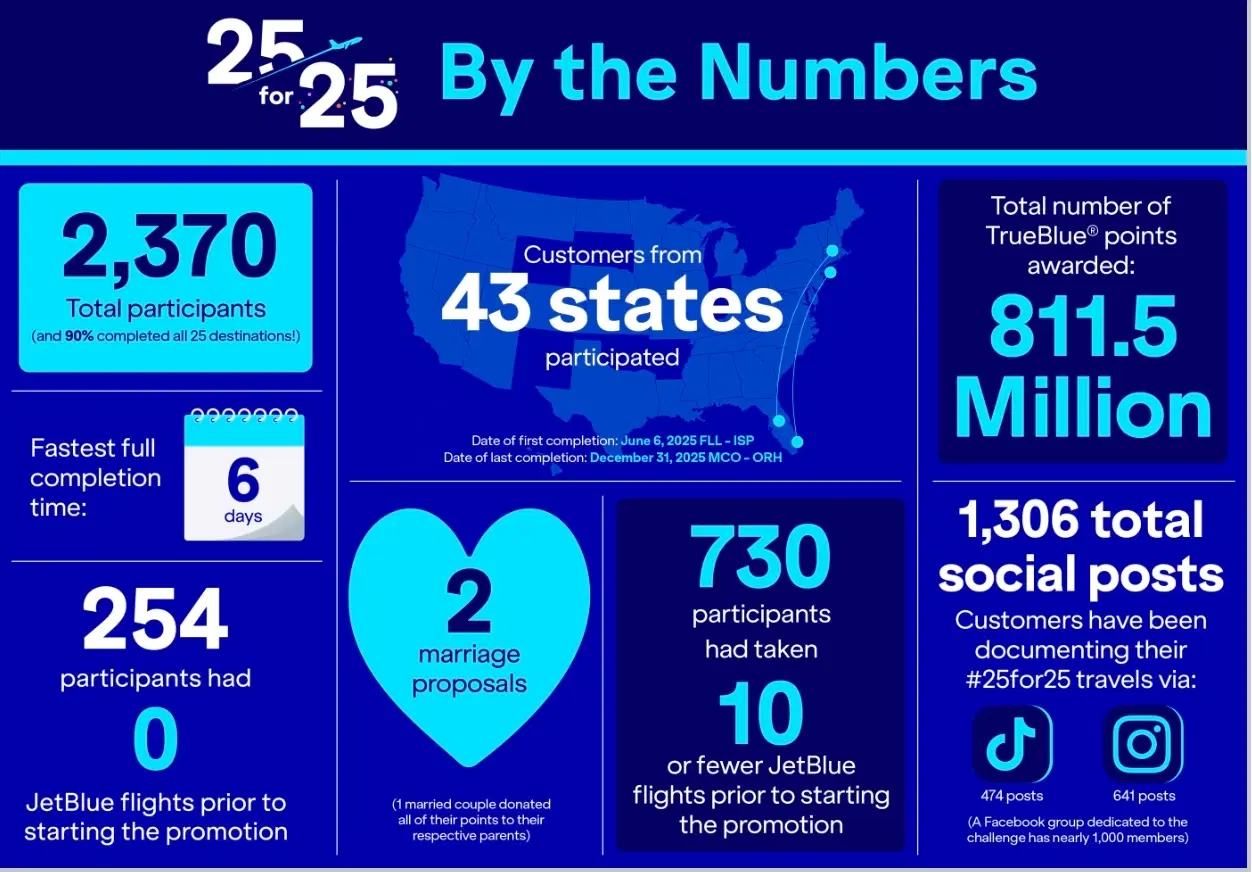
Loyalty via flying is still driven by where you live and where you travel. When I moved to the Fort Lauderdale area in ‘26, JetBlue naturally became my primary airline for points earned from flying because their nonstop network best fits where I need to go. Location still matters. (Luckily, I did their 25 for 25’ Birthday last year before moving here, so now I am set for 25 years of Mosaic Status)
For non air related earning, I expect :
- more earning through banks,
- more redemption flexibility,
- more everyday travel,
- Fewer debates over the charts and inventory rules of an earlier era of loyalty with dynamic pricing
- The programs will have more improvements on the third generation(I am the second generation)
“Points and Miles are becoming more accessible and more practical for everyday travelers.”
Why did dynamic pricing push you to create PointsYeah?
Troy Liu: Many people feel that dynamic pricing makes price more expensive. I see it differently. Dynamic pricing exposed the old world’s biggest flaw: published award prices with no seats available. A 35,000-mile award is useless if you can’t actually book it.
Dynamic pricing has opened up more seats, more dates, and more opportunities for everyday travelers. The old charts offered predictability on price, but finding availability often required considerable time and flexibility.
I built PointsYeah to help travelers navigate this new world, where the focus is shifting from seat availability to redemption option. I recently booked my holiday trip from Miami to Belize for just 15,000 miles round-trip. Under the old award chart, that would have cost 17,500 miles one way.
You say people should redeem more often, not just save for a “dream trip.” Why?
Troy Liu: Correct. I strongly believe that people should redeem their points more often. Big dream trips, which you save your points for year after year, are great, and I’ve taken plenty. But the real magic of points is in the everyday moments: seeing loved ones, attending a graduation, showing up for a friend’s birthday, catching your favorite band in another city. Those trips can matter just as much as a once-in-a-lifetime getaway.
Everyone is different, so everyone’s dream trip is different too. It doesn’t have to be first class to the Maldives. Any trip you take on points that saves you real cash is a dream redemption.
“My mantra: Burn often. Earn often. Repeat.”
What are the biggest misconceptions people have about loyalty programs?
Troy Liu: The biggest misconception is that award seats are limited or blackout dates are everywhere.. Dynamic pricing has expanded the options. Today, every seat is technically redeemable for US programs. The challenge is increasingly understanding the options.
The second is that points are too precious to spend. Points are valuable, but their value comes from using them. The best redemption isn’t necessarily the one with the highest theoretical value. It’s the one that gets you where you want to go, when you want to go, with the people you want to go with.
How is PointsYeah different than competitors?
Troy Liu: The real difference isn’t just the tech, it’s the philosophy of the people who built it.
PointsYeah was created by lifelong points-and-miles nerds who’ve spent decades inside loyalty programs, award charts, and partner networks. We believe something simple: you need to be a nerd to build this product, but you shouldn’t have to be a nerd to use it. That’s where most competitors get it wrong. They build for experts. We build for everyone.
While other platforms hide functionality behind paywalls or force you into spreadsheet-style interfaces, PointsYeah makes travel in points and miles fast, intuitive, and genuinely accessible.
And for our partners — airlines, banks, loyalty programs — PointsYeah supports what matters most: awareness, education, and engagement.
“When people finally see how easy to use points and miles, the entire ecosystem gets stronger. That’s the future we’re building.”
How does your industry experience show up in PointsYeah?
Troy Liu: Fifteen years at the intersection of loyalty marketing, media, and airline partnerships taught me a core lesson: the "best" redemption is entirely relative to the traveler and the moment.
Redemption priorities change whether you're flying solo in first class, booking an economy trip for a family of four, or using points to offset everyday costs during tight financial times. Our background drives two key principles across PointsYeah and PointsInsider:
- Consumer Clarity: We build products that translate complex points and miles redemption into transparent, personalized options without pushing an arbitrary "nerd" standard of value.
- Loyalty Engagement: We design search workflows that reduce booking friction, driving sustainable, long-term participation for loyalty partners.
Ultimately, industry experience isn’t about knowing every rule; it’s about knowing how to build products and think about things from different angles.
What’s the ultimate goal of PointsYeah?
Troy Liu: The goal of PointsYeah is simple: make points travel accessible to everyone. Too many people earn points but never use them because the process feels confusing or intimidating. We want to change that and give travelers the confidence to turn their points into real trips.
Ultimately, we're working toward a future where points and miles aren't just a hobby for experts. They're a practical, everyday travel tool that anyone can use.